25 Essential Solo Travel Tips for 2026 – Your Complete Guide to Travelling Alone Brilliantly
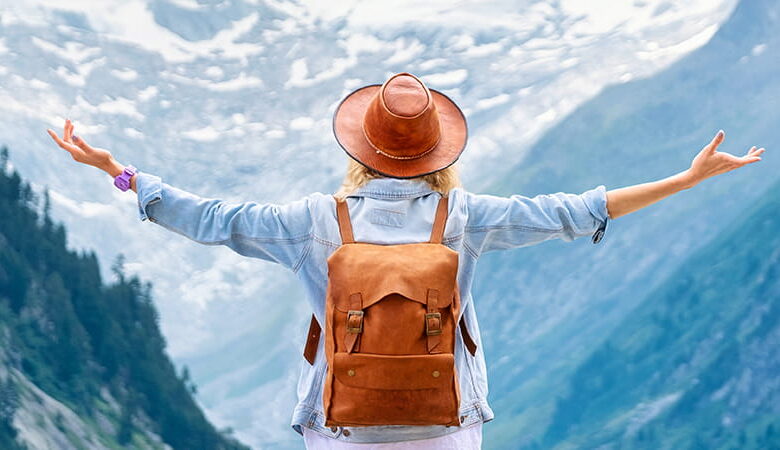
Our team has collectively logged over 8 years of solo travel across 60+ countries. We have made every mistake, learned every lesson and discovered every joy that solo travel offers. This guide contains the most important things we wish someone had told us before our first solo trip — and the insights that continue to make every subsequent trip better than the last.
Solo travel is one of the most transformative experiences available to any person. The freedom to go exactly where you want, at exactly the pace you want, without consulting or compromising with anyone else, produces a quality of experience that group travel simply cannot replicate. You also meet people more easily, adapt more flexibly, and discover things that organised group tours will never show you.
But solo travel done poorly can be lonely, expensive, stressful and occasionally unsafe. The difference between solo travel that transforms you and solo travel that defeats you is almost entirely a question of preparation, mindset and the right strategies. These 25 tips represent the most important of those strategies.
Section 1: Before You Leave — Planning and Preparation
1Start with an easy destination for your first solo trip
Your first solo trip is not the time to challenge yourself with a difficult language barrier, unreliable infrastructure or complex visa requirements. Choose a destination with good English proficiency, reliable transport and an established tourist infrastructure — Southeast Asia (Thailand, Vietnam, Bali), Western Europe, Japan and Portugal all fit this profile perfectly. Build confidence first, then tackle more challenging destinations.
2Book your first and last nights’ accommodation in advance — nothing else
Having somewhere confirmed to arrive at is essential for managing the anxiety of your first solo arrival. But booking your entire itinerary in advance removes the spontaneity that makes solo travel uniquely rewarding. Book your arrival night and your departure night accommodation, then leave the middle days open to evolve based on what you discover and who you meet. This balance of security and freedom is the sweet spot.
3Share your itinerary with someone at home
Email your rough itinerary — accommodation names, destinations and contact numbers — to a trusted person at home before you leave. Set a simple check-in schedule (a WhatsApp message every two or three days saying you are fine) and agree that if they do not hear from you within a set time, they should contact local authorities or your nearest embassy. This safety net costs nothing and provides genuine peace of mind for you and for people who care about you.
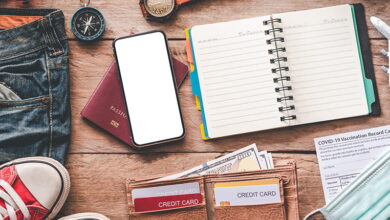
4Scan all important documents and store them digitally
Before leaving, scan your passport, travel insurance document, vaccination records, credit cards (front only) and hotel bookings. Store these in a secure cloud service — Google Drive, Dropbox or Apple iCloud — accessible from any device. If your bag is stolen, having digital copies of your documents dramatically accelerates the replacement process at embassies and insurance companies.
5Get comprehensive travel insurance — every single time
This is non-negotiable for solo travel. When you are ill, injured or stranded abroad with a travel companion, you have immediate support. Alone, you are managing a crisis in a foreign country without help. Travel insurance transforms medical emergencies, trip cancellations and lost baggage from catastrophes into manageable inconveniences. SafetyWing, World Nomads and Heymondo are our recommended providers for solo travellers.
Section 2: Safety — Staying Smart on the Road
6Trust your instincts — always
The most valuable safety tool you have is your intuition. If a situation feels wrong — a neighbourhood at night, a new acquaintance who seems overly helpful, a taxi driver who takes an unfamiliar route — trust that feeling and act on it. Politely but firmly removing yourself from uncomfortable situations is always the right call. The worst that happens is you were wrong and mildly embarrassed. The worst that happens when you ignore your instincts can be far worse.
7Keep your phone charged and emergency numbers saved
Your phone is your primary safety device — navigation, emergency contact, translation and photography all live there. Keep it charged above 20% whenever possible. Save the local emergency number, your country’s embassy phone number and your accommodation’s address as contacts before you leave your hotel each day. A dead phone in an emergency is a serious problem; a charged phone with the right numbers is a complete solution.
8Distribute your money across multiple locations
Never keep all your cash and cards in one place. Carry a daily spending amount in an accessible wallet, keep the rest — along with a backup credit card — in a secure money belt or hidden pocket. If your wallet is stolen, you lose your daily cash but not your entire trip budget. This simple habit eliminates one of the most common and damaging travel disasters.
9Use a VPN on all public WiFi
Public WiFi in hotels, cafés and airports is fundamentally insecure — anyone on the same network can potentially intercept your data. A VPN encrypts all your traffic, protecting your banking logins, passwords and sensitive communications. NordVPN or ExpressVPN on your phone and laptop costs $3–$7 per month and should run automatically whenever you connect to any network that is not your personal home connection.
10Research destination-specific scams before arriving
Every popular tourist destination has well-documented scams — taxi overcharging, gem shop cons, fake police officers, friendship bracelets, “closed” attractions. Searching “common scams in [destination]” before arrival takes 10 minutes and dramatically reduces your vulnerability. Knowing what to look for means you can recognise and decline these approaches confidently rather than being caught off-guard.
Section 3: Meeting People and Avoiding Loneliness
11Stay in hostels — even just the social areas
Hostels in 2026 are not the dingy dormitories of travel legend — the best ones offer private rooms with en-suite bathrooms in vibrant social environments. The common areas, organised tours and hostel bars create organic social connections that private hotels simply cannot replicate. You do not have to sleep in a dorm to benefit from a hostel’s social atmosphere — booking a private room in a sociable hostel gives you privacy and community simultaneously.
12Join free walking tours on your first day in any city
Free walking tours (tip-based, found on websites like freetour.com and guruwalk.com) are available in almost every major city and provide three valuable things simultaneously: city orientation, historical context and instant fellow travellers. Joining a walking tour on your first day in a new city means you arrive at dinner knowing 5–10 other travellers who might want company for the evening. This single habit has produced some of our most memorable travel friendships.
13Use Meetup and Couchsurfing events for local connections
Meetup.com lists events in cities worldwide — language exchanges, hiking groups, photography walks, pub quizzes and more. These events attract both locals and travellers and provide a structured social context that makes meeting people natural rather than forced. Couchsurfing’s Hangout and Events features serve a similar purpose. In cities where you know nobody, these platforms are the fastest path to genuine social connection.
14Sit at the bar or communal table when eating alone
The biggest anxiety for new solo travellers is eating alone. The solution is simple — sit at the bar or a communal table rather than an isolated table for one. Bar seating creates natural conversation opportunities with staff and other patrons. Communal tables in restaurant design explicitly invite shared dining. This one spatial choice transforms “eating alone” into a potential social experience without requiring any social courage.
15Be comfortable with your own company
The single most important quality for happy solo travel is the ability to enjoy your own company. Solo travel gives you something group travel never can — extended, uninterrupted time with your own thoughts, priorities and rhythms. Embrace the freedom to sit in a café for three hours with a book, to wander without destination, to eat exactly what you want when you want. This self-sufficiency is not loneliness — it is freedom.
Section 4: Money and Budget — Spending Smart Alone
16The solo travel tax is real — budget for it
Solo travel typically costs 20–40% more per person than group travel because you cannot split accommodation costs, private transport or tour fees. A double room that costs $60 per night costs $60 whether you fill it with one person or two. Budget explicitly for this solo premium rather than being surprised when your trip costs more than friends’ comparable group trips.
17Use Wise or Revolut as your primary travel money card
Both Wise and Revolut offer real exchange rates with minimal fees — significantly better than airport currency exchange or traditional bank cards with 2–3% foreign transaction fees. Set up at least one of these cards before your first solo trip and use it as your primary spending card internationally. The savings over a multi-week trip are substantial.
18Always negotiate or research transport prices before committing
Solo travellers are often targeted by opportunistic pricing in destinations where negotiation is normal — tuk-tuks in Bangkok, ferries in Bali, taxi drivers at airports worldwide. Research expected prices online before arriving, state your expected price confidently at the start of the negotiation, and be willing to walk away. Knowing the fair price and expecting to pay it consistently saves real money across a long trip.
Section 5: Technology — Your Solo Travel Toolkit
19Download offline maps before every new destination
Maps.me offline maps downloaded before arrival mean you always have navigation capability regardless of data availability. Download the offline map for every country on your itinerary before leaving home over your home WiFi connection. This single preparation step eliminates the anxiety of arriving somewhere new without connectivity and needing to navigate.
20Use Google Translate’s camera mode for menus and signs
Google Translate’s real-time camera translation — point your phone camera at any text and see the translation overlaid instantly — works offline for 59 languages and dramatically reduces the friction of navigating non-English environments. Download the language packs for your destinations before travelling. This single app feature has transformed the experience of eating at local restaurants and navigating non-Roman script signs.
21Set up a travel-specific Instagram or blog to document your journey
Documenting your solo travel journey serves two purposes beyond the obvious — it gives you a creative project that adds structure and meaning to your days, and it creates a community of followers who follow your journey with genuine interest. Many long-term solo travellers describe their blog or social following as providing a form of community connection that reduces the loneliness that occasionally accompanies extended solo travel.
Section 6: Mindset — Thriving as a Solo Traveller
22Embrace uncertainty as the point — not a problem
The plans that go wrong on solo trips become the stories you tell for decades. The missed bus that led to the unexpected overnight in a mountain village, the washed-out road that led to a stranger’s extraordinary hospitality, the cancelled flight that produced three days in a city you had never planned to visit — these unplanned moments are disproportionately likely to be your most treasured travel memories. Welcome uncertainty rather than fighting it.
23Give yourself permission to have bad days
Solo travel is not uniformly wonderful. Some days are lonely, exhausting, confusing or simply disappointing. This is normal — and it does not mean solo travel is not for you. The bad days are part of the experience, and they typically pass quickly. Giving yourself permission to feel them without guilt, to rest when needed, and to adjust plans when something is not working is the sustainable approach to extended solo travel.
24Say yes more than you think you should
The experiences that most define a solo journey are almost always the unplanned ones you said yes to — the locals who invited you for tea, the fellow traveller who suggested an off-map destination, the cooking class you almost skipped. Solo travel creates the conditions for these opportunities more readily than any other travel style. Saying yes to them, even when they feel slightly uncomfortable, produces the experiences you will remember longest.
25Plan your return before you need it
Know at the start of any solo trip what would cause you to return home early — a family emergency protocol, a health threshold that triggers going to a hospital or home, a safety situation that crosses a personal line. Having these decisions pre-made rather than trying to make them in the middle of a difficult situation reduces the cognitive burden enormously. Solo travel is most enjoyable when you feel in control — and pre-made contingency decisions are a significant part of that control.
Best solo travel destinations for beginners in 2026: Thailand — for its exceptional tourist infrastructure, English proficiency and warm local culture. Portugal — safe, affordable by Western European standards and easy to navigate. Japan — the safest country in the world for solo travel, with excellent public transport and a fascinating culture. New Zealand — English-speaking, safe, well-organised and extraordinarily beautiful.
Frequently Asked Questions
Is solo travel safe for women in 2026?
Yes — millions of women travel solo safely every year in every country in the world. Like all solo travel, destination choice, basic safety awareness and trusting your instincts are the primary determinants of safety. Destinations like Japan, Iceland, Portugal, New Zealand and Thailand consistently rank among the safest for solo female travellers. Research your specific destination for gender-specific safety considerations and connect with solo female travel communities on Reddit (r/solotravel, r/TwoXTravels) for destination-specific advice from experienced female solo travellers.
How do I deal with loneliness while travelling alone?
Loneliness in solo travel is real and normal — acknowledge it rather than suppressing it. The most effective strategies are: staying in sociable hostels or guesthouses, joining free walking tours, using Meetup for local events, eating at bars or communal tables and having a home check-in routine. Some solo travellers also find that having a creative project — a travel blog, photography challenge or language learning goal — provides purpose and structure that reduces the conditions under which loneliness tends to arise.
How much money do I need for a month of solo travel?
It depends dramatically on the destination and travel style. A month of solo travel in Southeast Asia (Thailand, Vietnam, Bali) on a mid-range budget costs approximately $1,500–$2,500. In Europe, budget $3,000–$5,000. In Japan, $3,000–$4,500. These estimates cover accommodation, food, transport, activities and a contingency fund. Backpacker budgets can be 40–50% lower by staying in dormitories, eating local food exclusively and using public transport. Higher-end travel can cost 2–3x these amounts.
Final Thoughts on Solo Travel
Solo travel will change you — in ways you cannot fully anticipate before you experience it. It builds self-reliance, confidence, adaptability and a profound comfort with uncertainty that benefits every area of life long after the trip ends. The first solo trip is always the hardest — each subsequent one becomes more natural and more rewarding. Start with an easy destination, prepare sensibly, say yes generously, and trust yourself more than you think you should. The world is waiting — and it is considerably more welcoming to solo travellers than most first-timers imagine.