Best Drones for Travel in 2026 – Compact, Powerful and Ready for Any Adventure
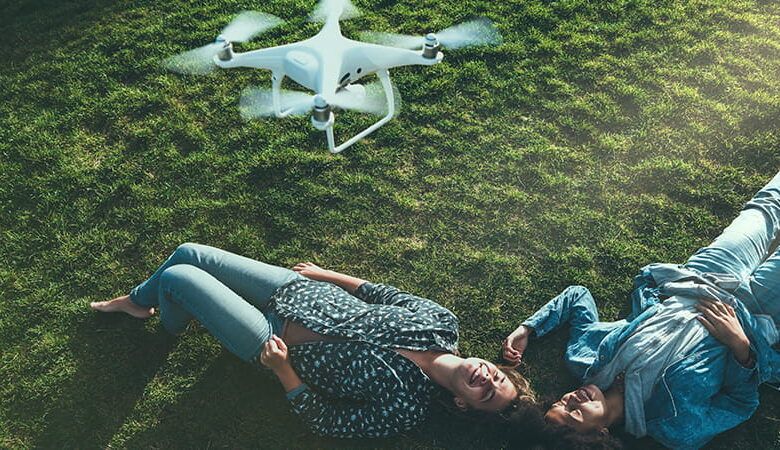
We flew 5 travel drones across 10 countries — over rice terraces in Bali, above temples in Kyoto, along coastal cliffs in Portugal and across desert dunes in Morocco. We tested image quality, wind resistance, obstacle avoidance and how each drone handles the practical realities of travel — packing, battery management and dealing with varying drone regulations country by country.
A travel drone transforms the way you document your adventures. The aerial perspective that was once available only to film crews with expensive helicopters is now accessible to any traveller willing to carry a device the size of a large smartphone. The result is footage and photography that simply cannot be captured from the ground — sweeping landscape shots that convey scale and beauty in a way no ground-level camera can match.
But choosing the right travel drone requires balancing image quality, portability, battery life, obstacle avoidance and — critically — weight. The sub-250g category (below the threshold requiring registration in many countries) has grown dramatically in capability, making lightweight travel drones more capable than ever before.
Best Travel Drones 2026 — Quick Comparison
| Drone | Weight | Camera | Flight Time | Wind | Price | Best For |
|---|---|---|---|---|---|---|
| DJI Mini 4 Pro | 249g | 4K 60fps HDR | 34 min | Level 6 | $759 | Best overall |
| DJI Air 3 | 720g | 4K 60fps | 46 min | Level 7 | $1,099 | Best image quality |
| DJI Mini 3 Pro | 249g | 4K 60fps | 34 min | Level 5 | $669 | Best budget sub-250g |
| Autel EVO Nano+ | 249g | 4K 30fps | 28 min | Level 5 | $649 | Best DJI alternative |
| DJI Mini 2 SE | 249g | 2.7K | 31 min | Level 5 | $299 | Best entry-level |
1. DJI Mini 4 Pro — Best Travel Drone Overall
The DJI Mini 4 Pro is the most significant step forward in the sub-250g drone category in years, and it earns its position as our top travel drone recommendation without reservation. The combination of a 48MP 1/1.3-inch CMOS sensor, 4K 60fps HDR video, Level 6 wind resistance and omnidirectional obstacle avoidance in a 249g body is genuinely extraordinary for the category.
The omnidirectional obstacle sensing — detecting obstacles in all directions including below — makes it the first sub-250g drone safe enough to fly confidently in tight spaces. Flying between temple pillars in Kyoto, through narrow canyons in Petra and along cobblestone alleys in Lisbon produced footage we would not have risked with a drone lacking this protection. Fewer crashes means more consistent usable footage from every trip.
The 34-minute maximum flight time is excellent for the category. In practice, accounting for take-off, landing and conservative battery management, expect 25–28 minutes of productive flying per battery. Purchasing the Fly More Combo (which includes three batteries and a charging hub) is strongly recommended — three batteries give you 75–85 minutes of continuous aerial coverage on a full day of shooting.
The Active Track 360 feature, introduced in the Mini 4 Pro, allows the drone to follow a moving subject in any direction while maintaining cinematic framing — previously a feature exclusive to DJI’s larger, heavier drones. For travel content creators who want footage of themselves in spectacular environments without a dedicated drone operator, this capability is genuinely transformative.
Weight
249g
Camera
48MP 1/1.3″ CMOS
Video
4K 60fps HDR
Flight time
34 minutes
Wind resistance
Level 6 (54km/h)
Price
$759
Pros
- Best sub-250g image quality
- Omnidirectional obstacle sensing
- 4K 60fps HDR video
- Level 6 wind resistance
- Active Track 360 subject following
- Folds incredibly compact
Cons
- $759 — not budget-friendly
- Only 34-minute flight time
- No telephoto option
- Regulations vary significantly by country
Our verdict: The DJI Mini 4 Pro is the best travel drone available in 2026. If you are serious about aerial travel footage and can absorb the $759 price, this is the drone to buy without hesitation.
2. DJI Air 3 — Best Image Quality Travel Drone
The DJI Air 3 steps above the Mini 4 Pro in two significant ways: image quality and dual camera capability. The main 1/1.3-inch sensor matches the Mini 4 Pro in quality, but the Air 3 adds a second 1/1.3-inch telephoto camera with a 70mm equivalent focal length — allowing you to compose shots that are impossible with a single wide-angle camera. The ability to shoot tight, compressed background shots or medium-distance portraits from a drone is a creative capability that genuinely expands what aerial photography can achieve.
The 46-minute maximum flight time is the longest on this list — providing 35–40 minutes of practical flying per battery. The Level 7 wind resistance (wind speeds up to 61km/h) makes the Air 3 usable in weather conditions that would ground the Mini 4 Pro. For coastal and mountain flying where wind is a constant factor, this resistance advantage is significant.
The trade-off is weight — at 720g, the Air 3 weighs nearly three times the Mini 4 Pro and requires registration in most countries. The larger size means it takes more bag space and attracts more attention when flying in public spaces. For travellers who prioritise absolute image quality and dual-camera flexibility over compactness, the Air 3 justifies its additional size and cost.
Pros
- Dual camera — wide and telephoto
- 46-minute flight time
- Level 7 wind resistance
- Excellent low-light performance
- D-Log M colour profile for editing
Cons
- 720g — significantly heavier
- Requires registration most countries
- More expensive at $1,099
- Larger — more bag space required
Our verdict: For content creators who need the absolute best aerial image quality and dual-camera creative flexibility, the DJI Air 3 is outstanding. For most travellers, the Mini 4 Pro’s sub-250g advantage makes more practical sense.
3. DJI Mini 2 SE — Best Budget Travel Drone
For travellers who want to experience drone flying without committing to a $700+ investment, the DJI Mini 2 SE provides a legitimate entry point at $299. The 2.7K video quality is below the 4K capability of the Mini 4 Pro, but the footage is more than sufficient for social media and personal travel memories. The 31-minute flight time and Level 5 wind resistance match the performance of drones costing significantly more.
The mini 2 SE uses the same 249g sub-registration-threshold design as the higher-end Mini models, providing most of the regulatory convenience at a dramatically lower price. For travellers who fly a drone occasionally rather than as a primary content creation tool, the Mini 2 SE represents excellent value.
Pros
- Excellent entry-level value at $299
- Sub-250g — minimal regulation
- 31-minute flight time
- Familiar DJI app and reliability
- Compact folding design
Cons
- 2.7K video (not 4K)
- No obstacle avoidance
- No RAW photo capture
- Older camera technology
Our verdict: The DJI Mini 2 SE is the best entry-level travel drone in 2026. It provides a genuine aerial photography experience at a price that does not require a major financial commitment.
Drone regulations are critical: Drone regulations vary enormously by country and change frequently. Many popular tourist destinations — including national parks, historic sites, city centres and beach areas — prohibit or restrict drone flying. Countries including India, Morocco and Cuba have strict import and operational regulations for drones. Always research the specific regulations of your destination before packing your drone, and register your drone wherever required. Flying without proper authorisation can result in confiscation, fines and significant legal complications.
Essential accessories for travel drones: Always travel with at least three batteries (the Fly More Combo is the easiest way), 128GB or larger microSD cards (4K footage fills cards quickly), ND filter sets (essential for smooth video in bright sunlight) and a hard case or dedicated drone bag. The original DJI packaging is inadequate protection for checked baggage — invest in a proper protective case.
Frequently Asked Questions
Is DJI Mini 4 Pro worth the upgrade from Mini 3 Pro?
Yes, for most buyers. The omnidirectional obstacle sensing (the Mini 3 Pro only has forward, backward and downward sensing), 4K 60fps HDR video, Active Track 360 and improved low-light performance are all meaningful upgrades. The $90 price difference is easily justified by the obstacle avoidance improvement alone — which reduces the risk of crashes significantly in complex environments. If you already own a Mini 3 Pro, the upgrade is worthwhile. If buying new, the Mini 4 Pro is the clear choice.
Can I bring a drone on a plane?
Yes, but with specific requirements. The drone itself and its batteries must travel in carry-on baggage — lithium batteries are not permitted in checked luggage. Most airlines permit spare drone batteries in carry-on bags, but check the watt-hour rating of your specific batteries and verify with your airline, as limits apply. DJI Mini series batteries are all well within standard airline limits. Keep the drone accessible for security inspection as it will almost certainly attract attention from X-ray operators.
Do I need a licence to fly a drone while travelling?
Requirements vary significantly by country. In the European Union, sub-250g drones like the DJI Mini series can be flown in the Open Category (A1) with registration required in most member states. In the United States, recreational flyers must register with the FAA and sub-250g drones require registration. Australia, Canada and the UK have similar frameworks. Many countries outside these regions have less defined regulations — always research your specific destination carefully and err on the side of caution in any doubt.
Final Verdict
The DJI Mini 4 Pro is the best travel drone in 2026 — the combination of sub-250g regulatory convenience, omnidirectional obstacle avoidance, 4K 60fps HDR video and Active Track subject following in a genuinely pocketable body is unmatched. Content creators who need the absolute best image quality and dual-camera capability should invest in the DJI Air 3. Budget-conscious travellers wanting their first drone experience will find the DJI Mini 2 SE a capable and affordable entry point. Whatever drone you choose, always check local regulations before flying — and always fly responsibly.