Best Mobile Hotspot Devices for Travel in 2026 – Stay Connected in 130+ Countries

We tested mobile hotspot devices across 15 countries on four continents — measuring real download speeds, connection reliability, battery life and total cost per gigabyte. Some devices performed brilliantly. Others disappointed dramatically despite impressive marketing claims. Here is exactly what we found.
There are moments when an eSIM card will not work, hotel WiFi has failed completely, and your phone’s local SIM has run out of data — and you desperately need internet access for a video call, a navigation update or an urgent client email. A dedicated mobile hotspot device exists precisely for these moments, providing reliable connectivity that works across borders without the complexity of managing multiple SIM cards or eSIM profiles.
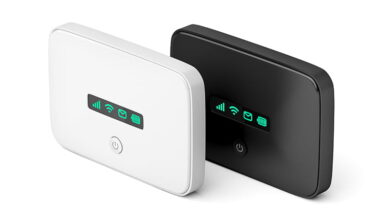
Mobile hotspot devices connect to local cellular networks — automatically selecting the strongest available carrier in each country — and broadcast a personal WiFi signal that any of your devices can connect to. The best modern devices handle this multi-country connectivity automatically, eliminating the need to purchase new SIMs at every destination.
Best Mobile Hotspot Devices 2026 — Comparison Table
| Device | Coverage | Data Plans | Battery | Price | Best For |
|---|---|---|---|---|---|
| Skyroam Solis X | 135+ countries | From $9/day | 13 hrs | $149 | Best overall |
| GlocalMe G4 Pro | 140+ countries | From $8/day | 12 hrs | $139 | Best value |
| Netgear Nighthawk M6 | 125+ countries | From $14/day | 13 hrs | $699 | Fastest speeds |
| TP-Link M7650 | 30+ countries | Bring own SIM | 16 hrs | $89 | Best battery life |
| Huawei E5787 | Varies by SIM | Bring own SIM | 8 hrs | $65 | Budget starter |
1. Skyroam Solis X — Best Overall Global Hotspot
The Skyroam Solis X is our top recommendation for most international travellers because it genuinely works everywhere without any configuration required. Switch it on in a new country and it automatically connects to the best available network — no SIM swapping, no eSIM profile management, no technical knowledge needed. The day-pass pricing model ($9 per day for unlimited 4G data) is ideal for occasional travellers who only need connectivity for specific days rather than continuous data.
Coverage extends to 135+ countries including all major tourist destinations in Asia, Europe, the Americas, Africa and the Middle East. In our testing across Japan, Thailand, Italy, Morocco and the UAE, the Solis X connected automatically in every location, typically within 60 seconds of powering on. Speeds averaged 18–45 Mbps download — perfectly adequate for video calls, navigation and general browsing.
The Solis X doubles as a 4,700mAh power bank for your devices, which partially offsets its $149 device cost. The built-in digital screen shows data usage, battery level and connection status — eliminating the guesswork of LED-only indicators. Up to 10 devices can connect simultaneously, making it genuinely useful for travel groups or digital nomads with multiple devices.
The day-pass pricing model has a significant advantage for non-daily travellers — you only pay for the days you activate data, rather than a monthly subscription that runs whether you use it or not. A traveller using the Solis X for 10 days per month pays $90 in data versus $60–$80 for a monthly plan — but avoids paying the remaining 20 days of subscription.
Pros
- Zero configuration — works instantly
- 135+ country coverage
- Pay only for days you use data
- Built-in power bank
- 10 device simultaneous connections
- Digital usage display
Cons
- Day pass model expensive for daily use
- Speeds slower than local SIM
- Additional cost on top of device price
- Slower in remote areas
Our verdict: The Skyroam Solis X is the best travel hotspot for international travellers who visit multiple countries and value zero-configuration simplicity over cost optimisation.
2. GlocalMe G4 Pro — Best Value Global Hotspot
The GlocalMe G4 Pro delivers comparable global coverage to the Skyroam at a lower device price and slightly cheaper daily data rates. Coverage spans 140+ countries — marginally broader than the Solis X — and the performance in major cities across Europe and Asia matched our expectations for a premium global hotspot.
What distinguishes the G4 Pro is its flexibility — in addition to GlocalMe’s own cloud SIM data service, the device accepts a physical SIM card. This means you can use local SIM cards in countries where they represent better value than GlocalMe’s daily rates — such as Southeast Asian countries where local SIMs cost $5–$10 for 30 days of data.
The 6,000mAh built-in battery extends the device’s power bank utility beyond the Solis X’s 4,700mAh, providing approximately three full iPhone charges. The touchscreen display makes navigating settings intuitive without needing to use a companion app. Build quality is good — the polycarbonate housing feels solid rather than cheap despite the lower price point.
Pros
- 140+ country coverage
- Accepts physical SIM card too
- 6,000mAh power bank
- Touchscreen interface
- Cheaper daily rates than Skyroam
Cons
- App required for full management
- Slightly bulkier than Solis X
- Customer support slower
Our verdict: The GlocalMe G4 Pro is the best value global hotspot in 2026 — slightly lower cost than the Solis X with the added flexibility of physical SIM support for even cheaper local rates.
3. TP-Link M7650 — Best for Long Battery Life
The TP-Link M7650 takes a different approach to the global hotspot devices above — it requires you to insert your own SIM card rather than providing built-in global connectivity. This makes it significantly cheaper per gigabyte of data (since you use local SIM cards or eSIM data) but less convenient when crossing borders frequently.
Where the M7650 excels is battery life — at 16 hours continuous use, it outlasts every other device on this list by a meaningful margin. For day-trippers, hikers and anyone who needs a hotspot for a full day without access to charging, this endurance advantage is significant. The Category 11 LTE modem delivers download speeds up to 300 Mbps where available — faster than most cloud SIM devices.
For travellers staying in one country for an extended period — digital nomads spending a month in Bali, for example — the M7650 paired with a local SIM card represents the most cost-effective connectivity solution. A $15 Telkomsel SIM card with 30GB of data plus the $89 M7650 costs less than three days of Skyroam data.
Pros
- 16-hour battery — longest tested
- Up to 300 Mbps with compatible SIM
- Cost-effective with local SIMs
- Excellent build quality
- 32 device connections
Cons
- Requires SIM card management
- Not automatic across borders
- Less convenient for multi-country trips
Our verdict: The TP-Link M7650 is the best hotspot for single-country extended stays. Pair it with a local SIM for unbeatable cost efficiency and the longest battery available.
Mobile Hotspot vs eSIM — Which Should You Use?
Both solve the same fundamental problem — getting data in foreign countries — but serve different travel styles. An eSIM lives in your phone, costs nothing extra for the hardware, and is the cleanest solution for solo travellers who only need to connect one device. A mobile hotspot creates a shared WiFi network for multiple devices simultaneously and works independently of your phone.
For digital nomads travelling with a laptop, tablet and phone who need all devices connected simultaneously, a mobile hotspot is more practical than tethering through your phone, which drains its battery rapidly and generates significant heat. For solo travellers with just a phone, an eSIM card is simpler, lighter and cheaper.
The ideal solution for many travellers is both — an eSIM for primary phone connectivity and a mobile hotspot for the days when you need reliable multi-device connectivity for important work or video calls.
Cost comparison tip: Before purchasing a global hotspot device, calculate your actual cost. If you travel internationally 10 days per year, a Skyroam at $9/day costs $90 in data annually — comparable to a single country’s local SIM cost but covering 135 countries. If you travel 60+ days per year, an eSIM subscription or local SIM cards will almost certainly be cheaper despite being more complex to manage.
Frequently Asked Questions
How many devices can connect to a travel hotspot at once?
Most consumer travel hotspots support 10–15 simultaneous connections, which is more than sufficient for individual or small group travel. The Skyroam Solis X supports 10 devices, the GlocalMe G4 Pro supports 10, and the TP-Link M7650 supports up to 32. In practice, connecting more than 5–6 devices simultaneously starts to reduce per-device speeds as bandwidth is shared.
Is a mobile hotspot faster than hotel WiFi?
It depends entirely on the hotel and location. In luxury hotels with dedicated bandwidth, hotel WiFi will often be faster than a mobile hotspot’s cellular connection. In budget hotels, guesthouses and locations with shared WiFi, a 4G mobile hotspot frequently delivers significantly faster speeds. In our testing, the Skyroam Solis X averaged 18–45 Mbps — faster than most budget accommodation WiFi we encountered.
Do mobile hotspot devices work in China?
Mobile hotspot devices access local Chinese cellular networks, which are subject to China’s internet restrictions — the same content blocked on local Chinese networks will be blocked through a hotspot. A VPN configured on your devices before entering China will route traffic through an encrypted tunnel, bypassing some restrictions. Download and configure your VPN before arriving in China, as VPN provider websites may be inaccessible from within the country.
Final Verdict
For most international travellers who visit multiple countries and value convenience above all else, the Skyroam Solis X is the best mobile hotspot device in 2026 — it just works, everywhere, with zero configuration. Budget-conscious travellers who want maximum coverage flexibility should consider the GlocalMe G4 Pro with its physical SIM backup capability. For digital nomads spending extended time in one country, the TP-Link M7650 with a local SIM card is the most cost-effective and highest-performing combination available.